
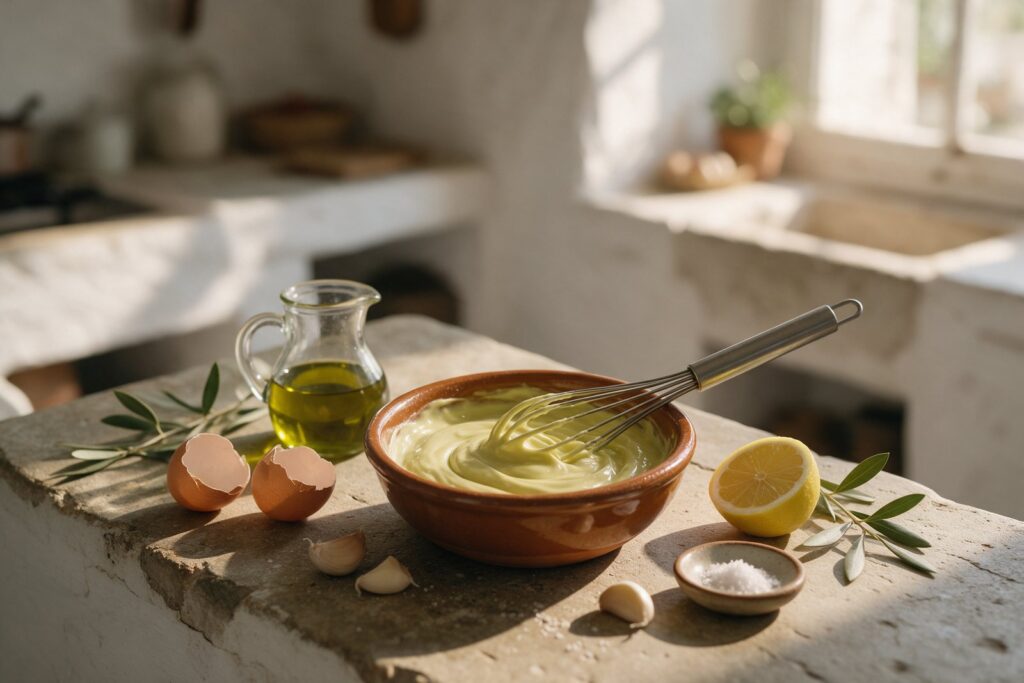
Yes, you can make mayonnaise with olive oil, and people in Spain have been doing it for as long as there has been mayonnaise. The catch is the oil. Make it in a blender with nothing but a young, green, peppery extra virgin and there is a good chance it comes out bitter, almost harsh, with a burn at the back of the throat. We grow and mill exactly that kind of oil, so rather than pretend otherwise, here is why it happens and how to get a mayonnaise you actually want to eat.
Why olive oil mayonnaise can turn bitter
The bitterness and the peppery catch in an oil like ours come from its polyphenols. Olives picked green carry more of them than ripe fruit, which is why an early-harvest Picual tastes the way it does: grassy, bitter, pungent. On a slice of bread or a plate of tomatoes that is the whole point. We wrote about it at length in our piece on the taste of Picual.
A mayonnaise is a different setting. It is mostly oil, held in tiny droplets by the egg yolk, and the oil’s flavour has nowhere to hide. The usual explanation for why a blender makes things worse is this: a stick blender or food processor shears the oil into far finer droplets than a whisk ever does, and in doing so spreads those bitter compounds very evenly through the whole emulsion. Whisked by hand, the same oil tends to taste rounder. Blitzed, it can turn aggressive.
So the problem is not olive oil as such. It is a strong olive oil, used at full strength, in a machine. Change any one of those three and the result changes with it.
How to tame a strong oil
There are several ways round it, and you can combine them.
- Whisk by hand. It takes longer and your arm will notice, but a hand-whisked mayonnaise made with a bold oil is noticeably gentler than a blended one.
- Blend the base, fold in the olive oil. Make the emulsion in the blender with a neutral oil, then switch to a whisk and beat the extra virgin in at the end. You get the olive flavour without the machine working on it.
- Cut it with a milder oil. Sunflower or a light rapeseed oil does the job. There is no correct ratio; half and half is a sensible place to start, then adjust to taste next time. Our rapeseed and olive oil comparison covers how the two behave differently.
- Add more acid and mustard. Extra lemon juice or a little more vinegar, plus a spoonful of Dijon, pulls the balance away from bitterness and towards brightness.
- Season properly. Salt softens the perception of bitterness. Taste once the emulsion has formed and season again if it is still sharp.
The method, step by step
This is the way we make it at home. It works by hand or with a stick blender, and the order matters more than the equipment.
- Take everything out of the fridge first. Room-temperature ingredients emulsify far more willingly than cold ones; a fridge-cold yolk is the most common reason a mayonnaise refuses to come together.
- Put one egg yolk in a bowl with a teaspoon of mustard, a pinch of salt and a squeeze of lemon. The yolk does the real work here: its lecithin is the emulsifier that lets oil and water sit together.
- Start adding the oil literally drop by drop, whisking all the time. This first stage is where an emulsion is won or lost, so go slowly until the mixture thickens and turns pale.
- Once it has clearly taken, pour the rest in a thin, steady stream, still whisking. If it becomes too stiff to work, loosen it with a few drops of water or lemon juice and carry on.
- If you are using the fold-in approach, this is the point to switch from the neutral oil to the extra virgin, by hand.
- Taste. Adjust the salt, acid and mustard until it sits right, then use it or chill it straight away.
If it splits
A split mayonnaise looks greasy and curdled, with oil pooling at the edges. It usually means the oil went in too fast at the start, or the ingredients were too cold. It is almost always rescuable.
Put a fresh egg yolk in a clean bowl, or a spoonful of water if you would rather not use another egg, and start whisking the split mixture into it the same way you added the oil at the beginning: a little at a time, only adding more once the last lot has been absorbed. The emulsion re-forms, and you lose nothing but a few minutes.
When you want it to taste of olive
None of this means a strong oil has no place in a cold sauce. It just belongs where its character is wanted. Aioli is the obvious case: garlic pounded with salt, emulsified with olive oil, and bold enough to stand next to grilled fish, roast potatoes or a bowl of fish stew. There the bitterness and pepper of a green oil are part of the flavour rather than a fault in it.
The same goes for a herb mayonnaise to serve with cold lamb, or a lemony one for asparagus. When the food on the plate is strong, the sauce can be too. For a plain mayonnaise for a sandwich or a potato salad, use one of the softer approaches above. More on matching oil to job is in our guide to using extra virgin olive oil.
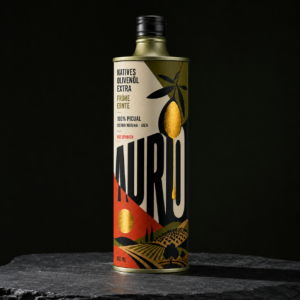
La Lata · 500 ml
Our oil is 100% Picual from a single grove in the Sierra Mágina, picked green in October and November and cold milled the same day. It is the oil to reach for when you want an aioli or a dressing to taste of olive, not the one to pour blind into a blender mayo.
Keep it cold, eat it soon
Homemade mayonnaise is made with raw egg yolk, and raw egg carries a risk of salmonella. That is a point about the egg, not the oil, but it decides how you treat the result. Many cooks use pasteurised eggs for exactly this reason, and many restaurants do the same for sauces like this.
At home, the common advice is simple: keep it in the fridge, make it for the meal you are eating, and do not keep it for days. It is at its best on the day it is made anyway.
For the oil itself, the usual rules apply: keep it away from light and heat between uses so it still tastes of fresh olives when you next make a batch.