
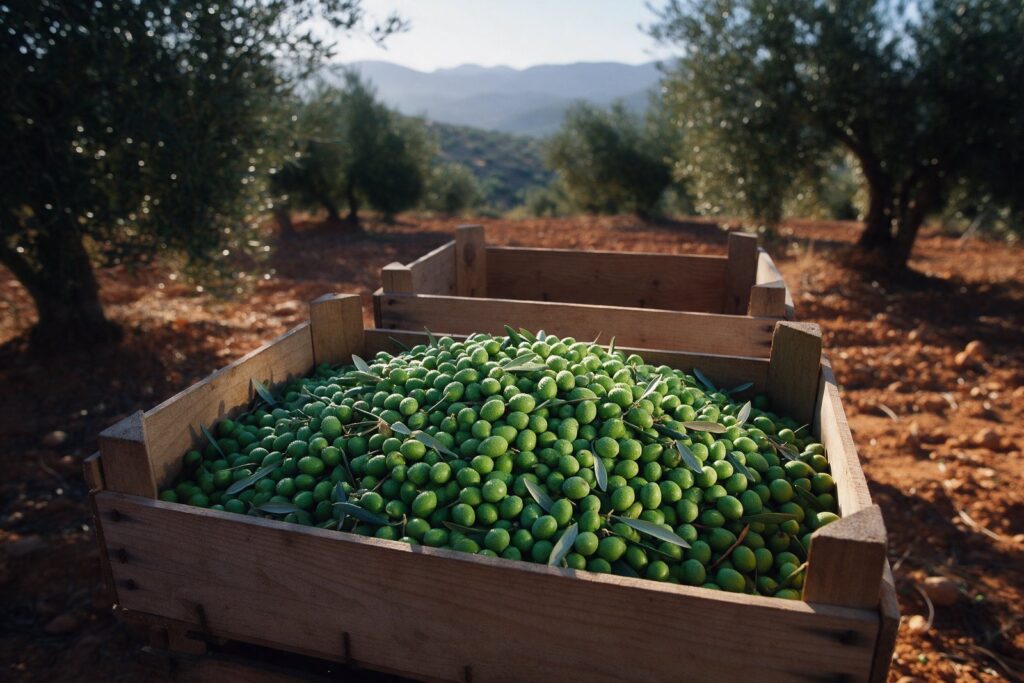
Not all extra virgin olive oil is the same. The biggest difference is made long before the bottle or the tin — namely on the day of the harvest. In this guide we explain what early harvest (Spanish cosecha temprana) really means, why an oil like this tastes green, bitter and pungent, and how you can recognise true quality.
What does “early harvest” mean?
We speak of early harvest when the olives are picked in the first weeks of the season — in October and November, when the fruit is still green and has only just begun to ripen. Wait longer and the olive turns black, yields more oil and is easier to process. The price for this: the oil loses character, aroma and valuable nutrients.
With early harvest the opposite is true: less oil per fruit, but far more character. This is exactly why early harvest is more demanding and more expensive — and exactly why it is worth it.
Why does it taste green, bitter and pungent?
Green, bitter and a tickle at the back of the throat are not faults but marks of quality. They come from the natural plant compounds of the green olive:
- Fruity: notes of fresh grass, tomato plant and green almond.
- Bitter: a clean, vegetal bitterness — typical of young olives.
- Pungent: the slight burn in the throat that many only learn to love.
Early harvest and polyphenols
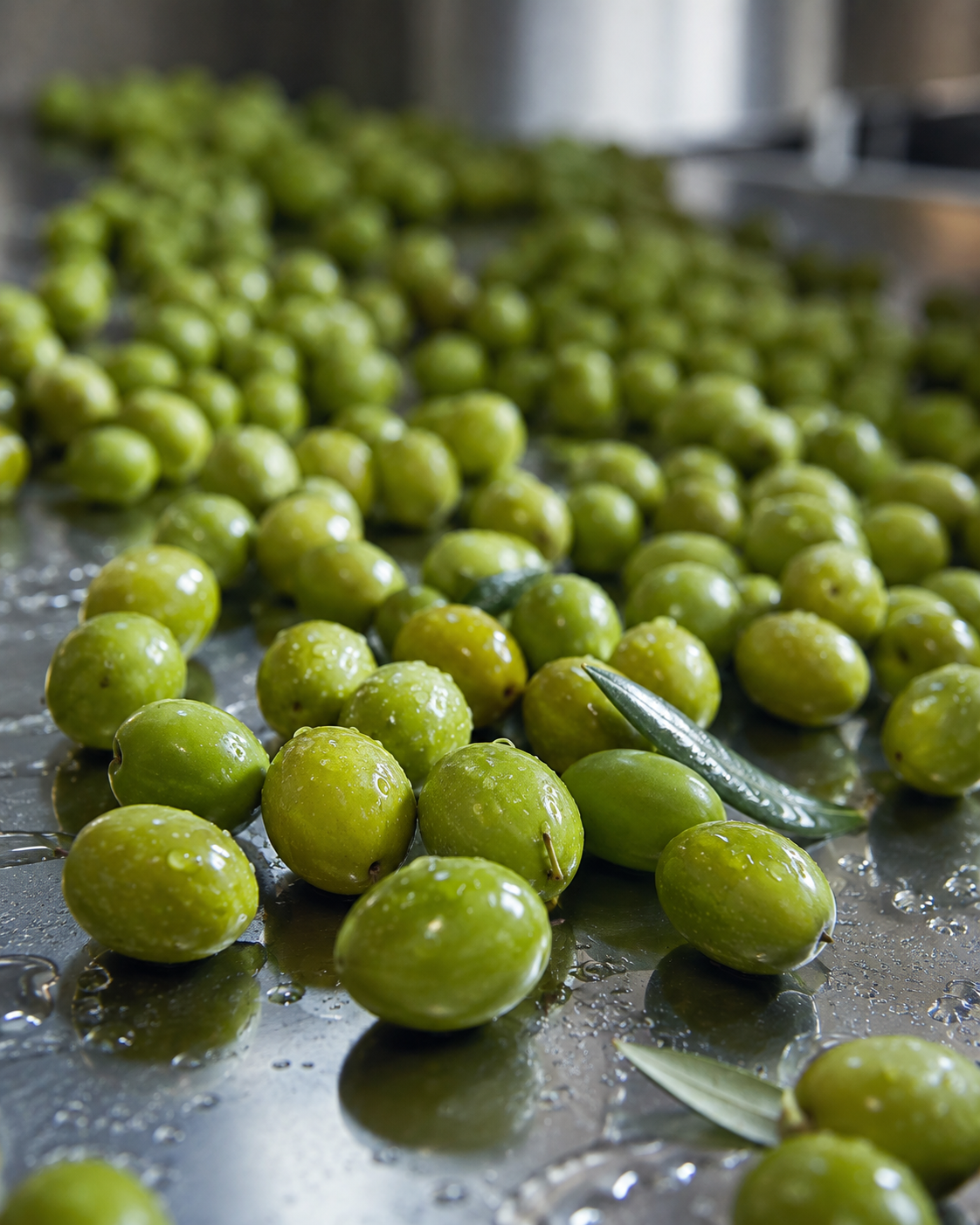
Green olives naturally contain more polyphenols — secondary plant compounds that give the oil its bitter, pungent character while acting as natural antioxidants.
The European Food Safety Authority (EFSA) recognises that olive oil polyphenols contribute to the protection of blood lipids from oxidative stress — provided the oil delivers the corresponding amount and you consume around 20 g of olive oil daily (about two tablespoons) as part of a balanced diet. An oil from an early harvest reaches these levels more easily than a late-harvested one.
How do you recognise a good early-harvest oil?
- Harvest year on the label: fresh oil from the current season, not a “bottling date”.
- Variety and origin: a named variety (e.g. 100% Picual) and a specific region.
- Cold extraction: processing below 27 °C.
- Packaging: dark glass or — better still — a tin that protects the oil completely from light.
- The taste: green, fruity, with noticeable bitterness and pungency.
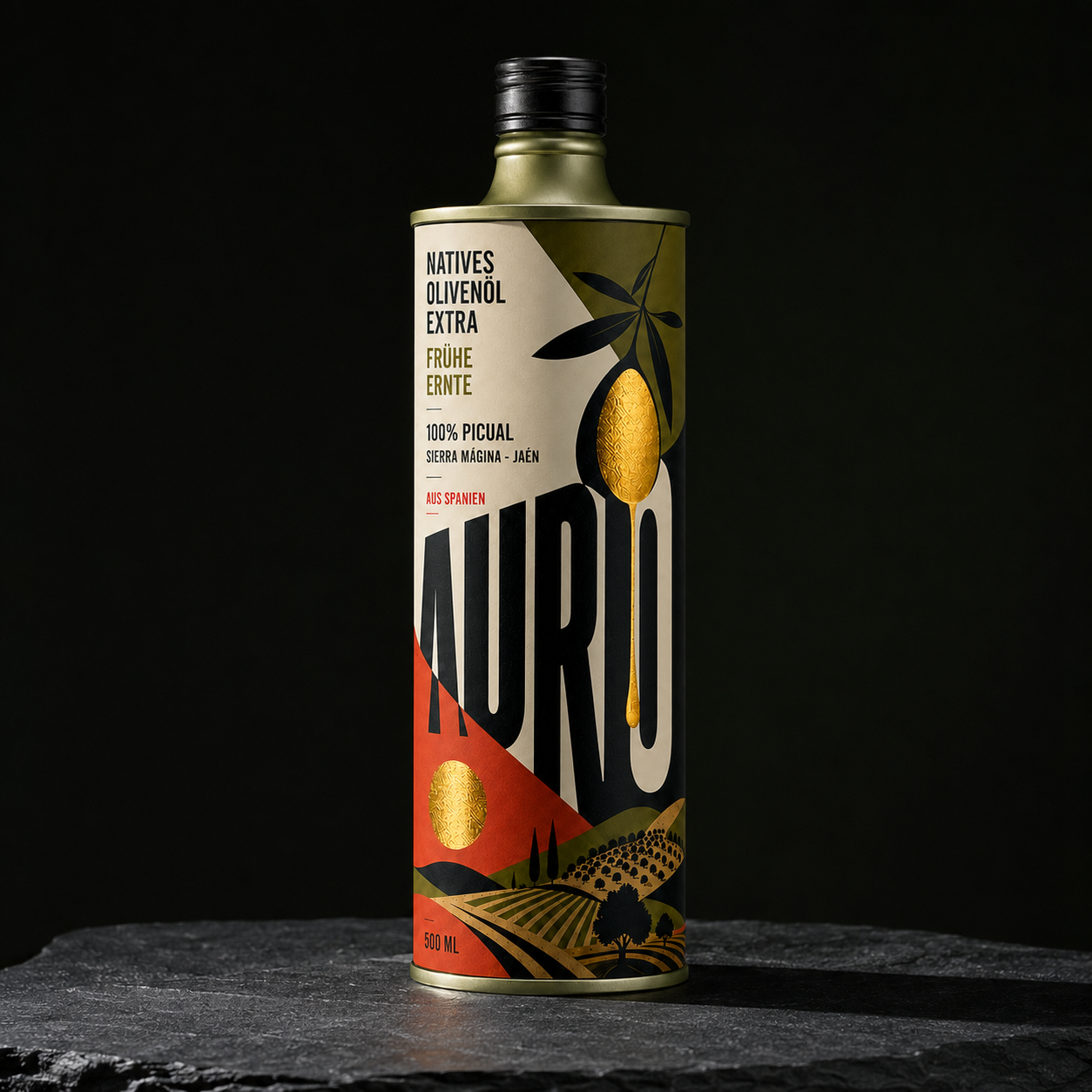
AURO: 100% Picual from the Sierra Mágina
Our La Lata is exactly this kind of oil: 100% Picual from a single olive grove in the Sierra Mágina (Jaén), at over 900 metres altitude. Early harvested, cold milled the same day and packed in the tin that protects it from light and oxygen.
Early harvest is not marketing. You taste it in the first drop.
Want to experience the difference for yourself? Secure a tin of the 2026 harvest on pre-order.