
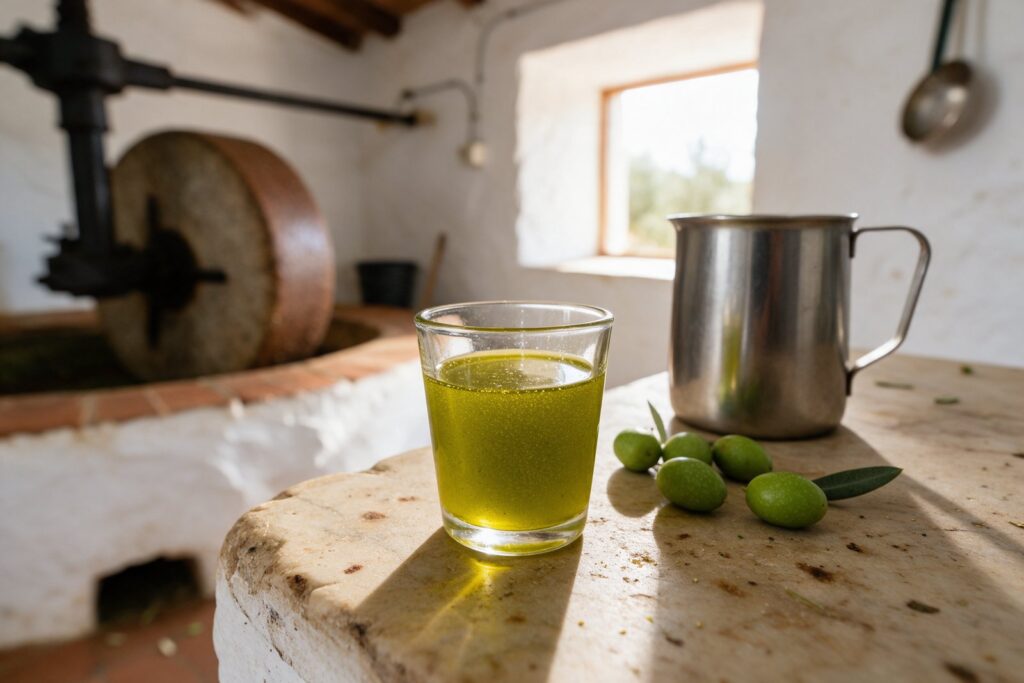
Unfiltered olive oil is oil that has gone from the mill into the bottle or tin without passing through a filter. That is the whole definition. It looks cloudy, sometimes has a layer of sludge at the bottom, and is often sold as the more natural, more authentic choice. Some of that reputation is earned and some of it is not, so here is what is actually in the haze, what it does to the oil over the following months, and how to judge whether it is worth it for you.
Contents
- What unfiltered olive oil actually is
- Why it is cloudy: what the sediment is
- How mills clear oil: settling or filtering
- Keeping quality: why the sediment matters
- Light, heat and the container
- Taste: what filtering changes and what it doesn’t
- Is unfiltered olive oil better?
- What to look for when you buy
What unfiltered olive oil actually is
“Unfiltered” describes one step at the end of the process, not a grade. An unfiltered extra virgin has to meet exactly the same criteria as any other extra virgin: free acidity of no more than 0.8 % expressed as oleic acid, the other lab limits, and a tasting panel that finds fruit and no defects. If it fails any of those, it is not extra virgin, filtered or not.
Why it is cloudy: what the sediment is
Every olive oil starts out cloudy. In a modern Spanish mill the olives are crushed, the paste is slowly mixed (malaxation, typically 20 to 45 minutes), and a two-phase decanter separates the oil from the water and solids. A vertical centrifuge then polishes it further. What comes out is green, opaque and only minutes old, as we describe in how olive oil is made.
The haze in that fresh oil is made of two things:
- Tiny droplets of vegetation water — the olive’s own water, held in suspension as a fine emulsion.
- Fine particles of fruit — fragments of skin and flesh too small for the centrifuge to remove.
Left alone, both slowly sink. Over weeks a layer forms at the bottom of the tank, or the bottle: a soft, brownish deposit sometimes called the “lees” or, in Spain, borras. That is what people mean by olive oil sediment. It is not dirt and not a sign of fraud. It is simply what is left of the fruit.
How mills clear oil: settling or filtering
A mill has two ways to get those solids and water out, and many use both.
Settling (decanting). The oil rests in stainless steel tanks, gravity pulls the sediment down, and the clear oil is drawn off the top. This is called racking, and it can be repeated. It is slow and gentle, but it never gets everything: some fine haze stays in suspension.
Filtering. The oil is pushed through a filter medium. Common choices are cotton or cellulose media, filter plates, and diatomaceous earth. Filtering removes what settling leaves behind, quickly, and gives a bright, clear oil.
An oil sold as unfiltered may have been settled and racked, in which case it is fairly clear with a little haze, or bottled more or less straight off the centrifuge, in which case it is properly cloudy and will throw a deposit. The word “unfiltered” alone does not tell you which.
Keeping quality: why the sediment matters
This is the part the romantic version leaves out. The solids and water in an unfiltered oil are not inert. Water and bits of fruit at the bottom of a container are exactly the conditions in which fermentation starts. Given time and warmth, the sediment can spoil, and the oil sitting on it picks up the taste. Tasters call the result “fusty” or muddy, sometimes with a winey or vinegary edge. These are recognised defects, and an oil that shows them is no longer extra virgin.
Water also helps break the fat down into free fatty acids, which is one of the ways an oil ages. So, broadly, the more water and solids an oil carries, the shorter its comfortable life tends to be. We are not going to put a number in months on that: it depends on how much sediment there is, the temperature, and how the oil was made in the first place.
None of this means unfiltered oil is bad. It means it is less forgiving. A well-settled unfiltered oil drunk within its season can be lovely. A heavily cloudy one left in a warm kitchen for a year is a gamble. For the wider picture, see does olive oil go off?
Light, heat and the container
Filtration is only one factor in how an oil keeps, and not the biggest. Light, heat and air do more damage to any olive oil, cloudy or clear. Light in particular speeds up oxidation, and the polyphenols that give a young oil its bitterness and pepper are used up protecting the fat as it happens. Keep the oil cool, away from the hob, closed, and out of the light, and use it within a reasonable time once opened.
That is also why we pack ours in a tin. A tin blocks light completely, which a clear bottle cannot, and a tinted one only partly. We explain the trade-offs in olive oil tin vs bottle.
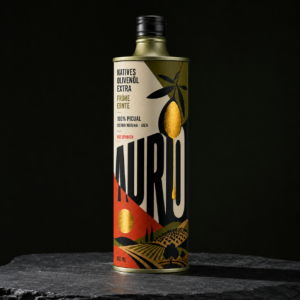
The tin · 500 ml
100 % Picual from a single grove in the Sierra Mágina, Jaén, at over 900 metres. Picked green in October and November, cold milled the same day below 27 °C, and packed in a 500 ml tin that keeps the light out completely.
Taste: what filtering changes and what it doesn’t
People who prefer unfiltered oil usually say it tastes fuller, rounder, more of the fruit. There is something in that. Filtering can take a little of the volatile aroma with it, and some tasters find a freshly made, lightly hazy oil has more body in the mouth. Others find the difference hard to spot blind.
What filtering does not do is remove the character of the oil. The bitterness and pungency of an early-harvest Picual, the green tomato and cut-grass notes, come from the fruit, the timing of the harvest and the milling, not from the haze. A good filtered oil and a good unfiltered oil from the same olives taste far more alike than either does to an oil made from overripe fruit. If flavour is what you are after, the variety and the harvest date matter more than the filter.
The other side of the taste question is time. In the first weeks, unfiltered can have the edge. Months later, the advantage can turn round, because a fusty note from old sediment is far worse than any loss of aroma from filtering.
Is unfiltered olive oil better?
On taste, freshness and keeping quality, the honest answer is: it depends on when you drink it.
- Freshly milled, within the season: unfiltered olive oil can be a real pleasure, with a little more body and aroma. This is the new-season oil people in Spanish olive country look forward to each autumn.
- For keeping: a filtered or well-settled oil is more stable. Fewer solids and less water mean less to go wrong in the cupboard.
- For quality in general: neither wins on its own. Grade, freshness, harvest timing and storage decide far more than the filter does.
Cloudiness is not proof of quality and clarity is not a sign of heavy processing: the right choice depends on how fast you will use the oil.
What to look for when you buy
If you want to buy unfiltered olive oil, a few things help you get the good side of the trade-off:
- A harvest date or season on the label. With unfiltered oil, freshness matters even more than usual.
- A small container you will finish soon. Less time sitting on its sediment.
- Light-proof packaging. Tin or opaque glass, not clear glass on a sunny shelf.
- A thin, even haze or a modest deposit rather than a thick layer of sludge.
- Your nose. Fresh oil smells green and fruity. A smell like damp cellar, mud or wine means the sediment has started to spoil.
If you find a deposit at the bottom and the oil still smells fresh, there is no need to throw it out: pour gently and leave the last of it in the tin or bottle. And whatever you buy, filtered or unfiltered, the usual tasting checks work just as well.